

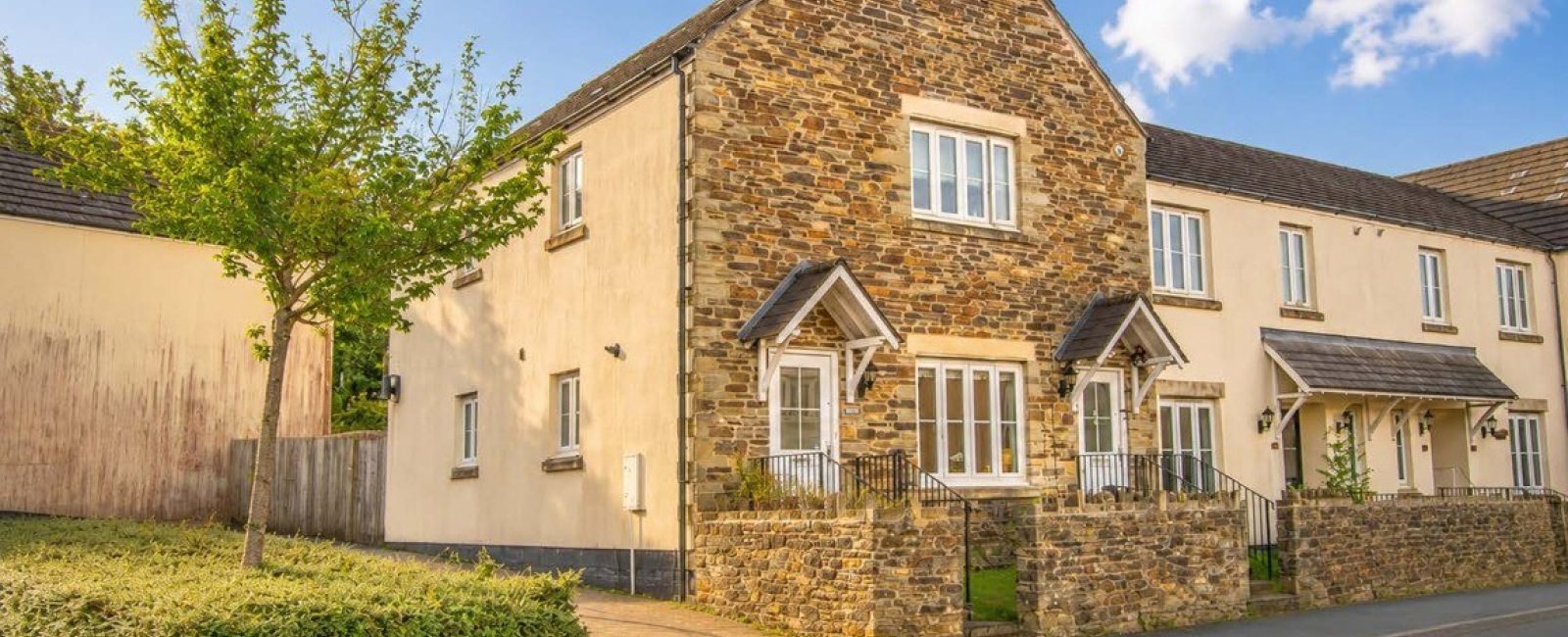
Repairs in newly-built properties
Some repairs fall within a “defects liability period”. The defects liability period begins upon practical completion and typically lasts six to twelve months.
Any defects that arise during this period should be reported to our freephone repairs line. Upon receipt of the information a decision will be taken whether the repair is a defect of the works (ie works that are not in accordance with the contract), or a maintenance issue, that you, the leaseholder, would be responsible for. If it is a defect, instructions will be passed to the contractor to make good the defects within a reasonable time.
At the end of the defects liability period, we will prepare a schedule of defects, listing those defects that have not yet been rectified, and agree with the builder the date by which they will be put right. The builder must rectify defects within a reasonable time.
When to report a repair that is our responsibility
Please let us know immediately if you need to report an emergency repair which is our responsibility.
If the repair is our responsibility but is not an emergency, you can contact us at any time during normal working hours.
All repairs are classed as being emergency, urgent or routine and have different target times. These depend upon our surveyors, contractors and trade staff being able to gain access to undertake the work. Response times are measured from when a repair is reported.
Cyclical and planned maintenance
We will arrange a programme of redecoration and associated repairs at each block of flats. This will normally be once every six to seven years or as considered necessary in line with your lease. The work may include:
- redecoration of communal areas;
- repointing brickwork on the outside of the building;
- repairing or replacing faulty gutters and rainwater pipes;
- painting outside windows and doors and gates;
- repairing faulty roofing; and
- repairing broken boundary fences and footpaths.
We refer to this as cyclical maintenance. We will arrange for a condition survey to be carried out at your scheme, which will help us identify cyclical work that needs to be carried out. We will also repair or replace parts of the building that are nearing the end of their expected life. We refer to this as planned maintenance.
We may use surveyors to prepare a specification, to tender the work and to supervise contractors as they carry out the work.
Consultation on cyclical and planned maintenance and other major repairs
Under the Landlord and Tenant Act 1985 and the Commonhold and Leasehold Reform Act 2002, all landlords must give information about the repair work if the cost to a leaseholder will be more than the amount set by the government regulations. This is currently £250 a property. So, if we want to carry out any work which is likely to cost any home owner more than £250 including VAT and administration costs, we will consult you by:
- providing you with details of the work we are planning to do
- providing you with at least two estimates
- inviting you to nominate a contractor other than the ones we have asked to tender and
- asking for comments and/or observations.
Consultation will also be required if we intend to enter into a long term contract (over 12 months) where the cost of the contribution per home owner exceeds £100.
When we undertake work which will cost less than £250 per property, we are not required by law to undertake full consultation. However, we will normally advise you when such works are planned, except in the case of emergency repairs.
Paying for cyclical and planned maintenance
When we undertake cyclical and planned maintenance and other repairs, we will charge each shared owner and leaseholder a share of the cost of the work. Sinking funds may be sufficient to meet all or part of your share of the costs. Where there are no sinking funds, or they are insufficient, you will be invoiced for the amount you have to pay towards the cost of the work with an additional administration charge.
Gas servicing and fire safety
In 1998, the government introduced a new law for all landlords who rent out a property, to employ a registered gas engineer to carry out a gas safety check at least once a year, on all gas appliances. Upon request, a landlord should be able to provide a certificate to prove that their gas appliances are serviced. If you are a leaseholder that rents out your property, you are a landlord and this law applies to you. Even if you are not a landlord, Magna strongly recommend that you have your boiler and other gas appliances serviced once a year. It could reduce the cost of repairs as well as ensure that your home appliances are safe for you to use.
We do our best to keep your homes safe from fire – and we need your help.
- If you have smoke alarms, test them weekly, and replace batteries when necessary.
- Make sure you know what to do if you do have a fire. Have an escape route planned.
- Keep your escape routes clear.
- If there is anything that might prevent you escaping, please contact the home ownership team for advice.
Flat entrance doors that open onto a communal area or an escape route (whether internal or external) should meet current fire safety standards. British Standard BS8214:26 recommends that these doors provide a minimum of 30 minutes' fire resistance and are fitted with appropriate smoke seals and a self-closing device. These are commonly known as FD30S fire doors.
A compliant fire door helps contain fire and smoke, slows the spread of fire throughout the building, and provides valuable time for residents to escape safely.
You may be asked to provide evidence that your flat entrance door is a certified fire door. Certification is often identified by a label, plug, or marker located on the top edge of the door or within the hinge area. This indicates that the door has been designed, tested and installed to provide the required level of fire protection.
If your door does not meet the required fire safety standards, you may be in breach of the terms of your lease. More importantly, a non-compliant fire door could place you, your family, your visitors and your neighbours at increased risk in the event of a fire.
Cavity wall and loft insulation
If you live in a flat, the roof space belongs to Magna and does not form part of your demise. Magna does not permit you to stores items in this space and / or install cavity wall or loft insulation.
Not all properties are suitable for cavity wall insulation. If your home is in a highly exposed area that is subject to harsh weather conditions, has a cavity of less than 50mm or the structure would require expensive remedial works in order to install the insulation, it may be that your home would not benefit from these works and could prove to be detrimental to the property. If you require more information on this, you can contact us on 0800 358 6025.
Loft spaces are not designed for storage purposes. Any articles you store in a loft area are at your own risk. If we need to get access to a loft for maintenance work you may be asked to remove any items you have stored there.
Alterations
Your lease will say what alterations you can make. Any structural alterations may also need planning permission or building regulation approval (or both).
Please note there may be a charge for your landlord to grant consent for alterations.
We can only withhold permission if we have good reason. For example, if the alteration will:
- make your home less safe
- increase our maintenance costs
- break building or planning regulations or
- break the conditions of the lease.
For structural alterations, we may get the advice of a surveyor before we approve your alteration. We may also ask the surveyor to check that the completed work is done to a good standard. We will charge you the cost of the surveyor. We will tell you beforehand how much the surveyor will charge and get your approval before we ask the surveyor to start work.
We will ask you to return your home to its original state if you make an alteration without our approval.
Insurance
For most of our properties, Magna is responsible for arranging buildings insurance. This covers the structure of your home against major risks such as:
Fire
Flooding
Subsidence
Storm damage.
You can view our building insurance here: Do I need insurance on my property? | Magna.
If you are unsure whether Magna provides buildings insurance for your home, you should check your lease, as responsibilities can vary between properties.
Buildings insurance does not cover your personal belongings. We strongly recommend that you arrange your own contents insurance to protect items such as:
Furniture
Carpets and flooring
Clothing
Electrical appliances
Personal possessions.
Damage to neighbouring properties
You may be responsible for damage caused to your neighbours' property or belongings as a result of an incident originating from your home. For example:
A leaking washing machine damaging the flat below
An overflowing bath causing water damage to a neighbour's property.
In these circumstances, you may be liable for the cost of repairs or replacement. We therefore strongly recommend that your contents insurance includes personal liability cover.
Contractor damage
Magna's contractors carry insurance to cover accidental damage caused while carrying out work in your home. If you believe a contractor has damaged your property or possessions, please contact us as soon as possible so that we can help investigate the matter.
